Isa Fabella
UX Designer
Restoring trust in a fragmented CMS
Summit Media · 2022
Context
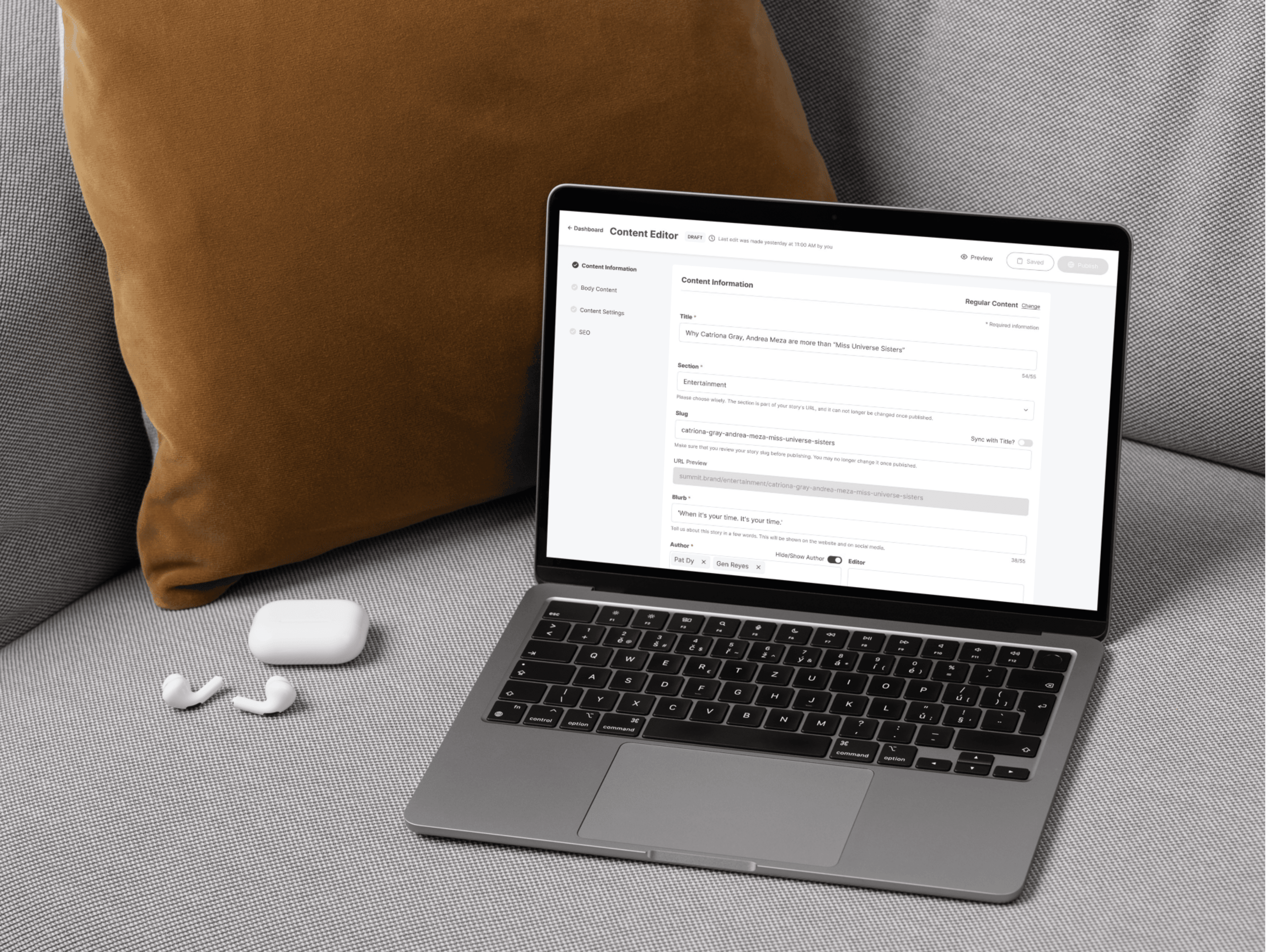
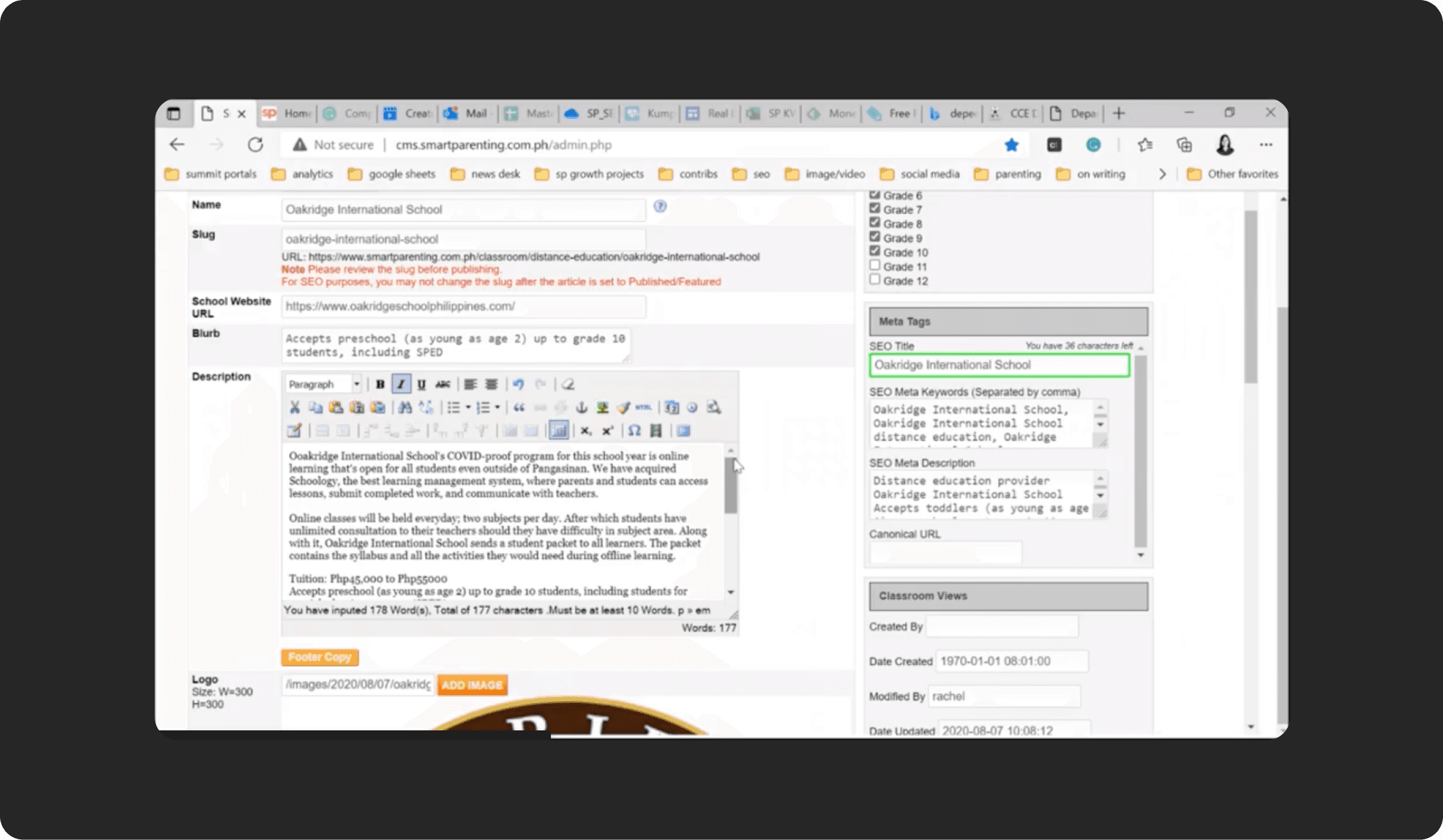
Summit Media’s editors were spread across three legacy CMS platforms, each with inconsistent behaviors and frequent failures.
Publishing content was slow and stressful, forcing editors to rely on workarounds like Google Docs and manual HTML edits just to feel safe. This fragmentation directly affected editorial speed, content quality, and team morale across 12 brands.
Problem
Through interviews with 20+ editors and a survey across 70+ users, we learned that editors did not trust their CMS. Saving felt unreliable, required fields were overwhelming, and system feedback was unclear. This made every publish feel risky.
Approach
I worked with a cross-functional team and owned research, interaction design, and UI for the content editor within a broader CMS rebuild.
Rather than designing from scratch, I studied all three legacy CMS platforms to understand what editors were already compensating for. This allowed me to distinguish between necessary complexity and friction that had simply accumulated over time.
We narrowed publishing down to the essential inputs required to move an article live, trimming nearly half of the fields legacy systems had previously required. This shift reframed the editor around writing first, configuration second.
Because trust was already low, the approach prioritized visibility and reassurance over novelty. I iterated quickly and tested low-fidelity prototypes to validate layout, hierarchy, and system feedback.
Solution
Our new content editor provided editors with a writing experience that reduced cognitive load and restoring trust in the moments that mattered most during writing and publishing.
I grouped required fields into clearer logical sections so editors were no longer confronted with everything at once. This allowed them to stay in a writing mindset instead of context-switching between content and configuration.
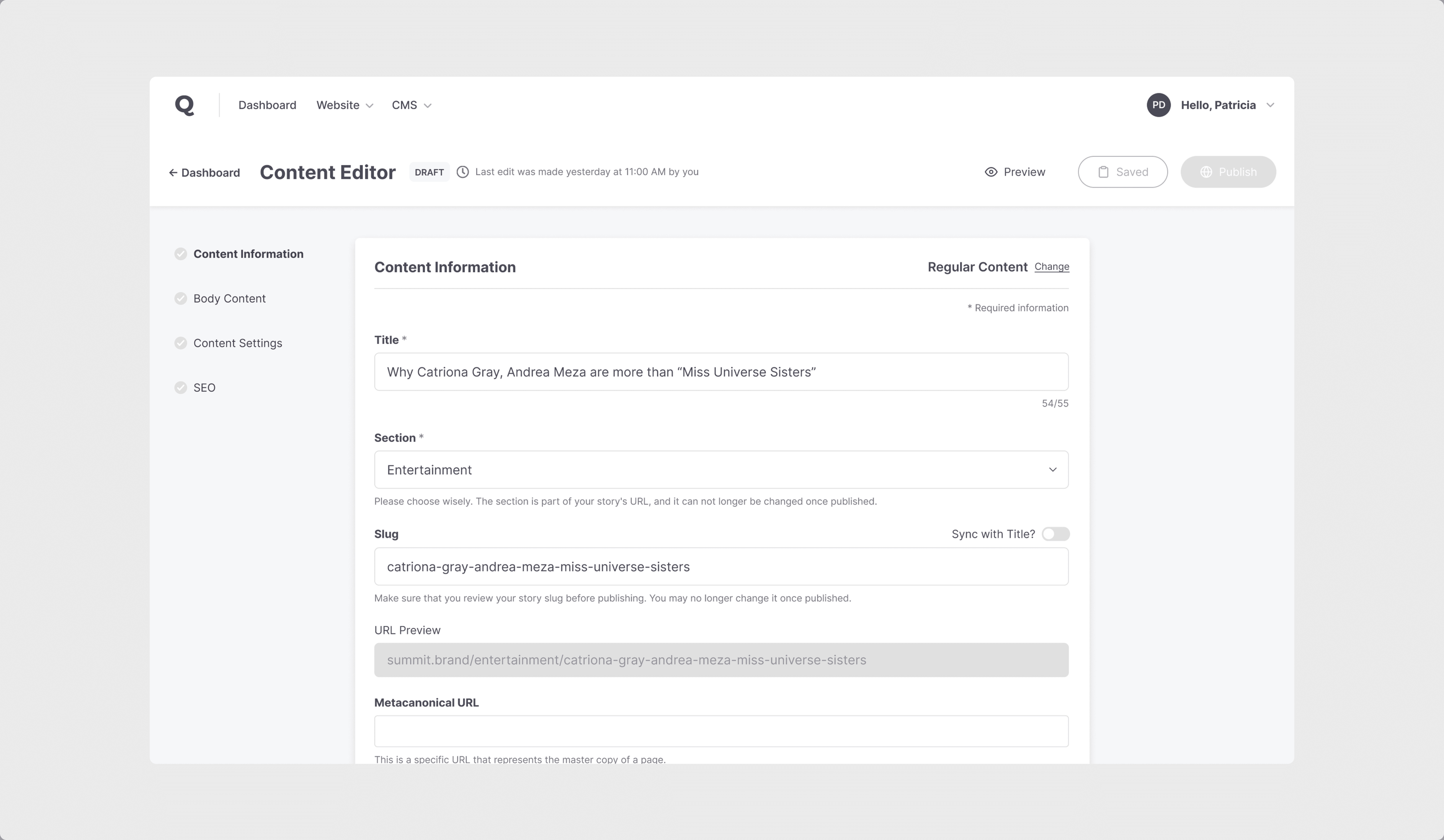
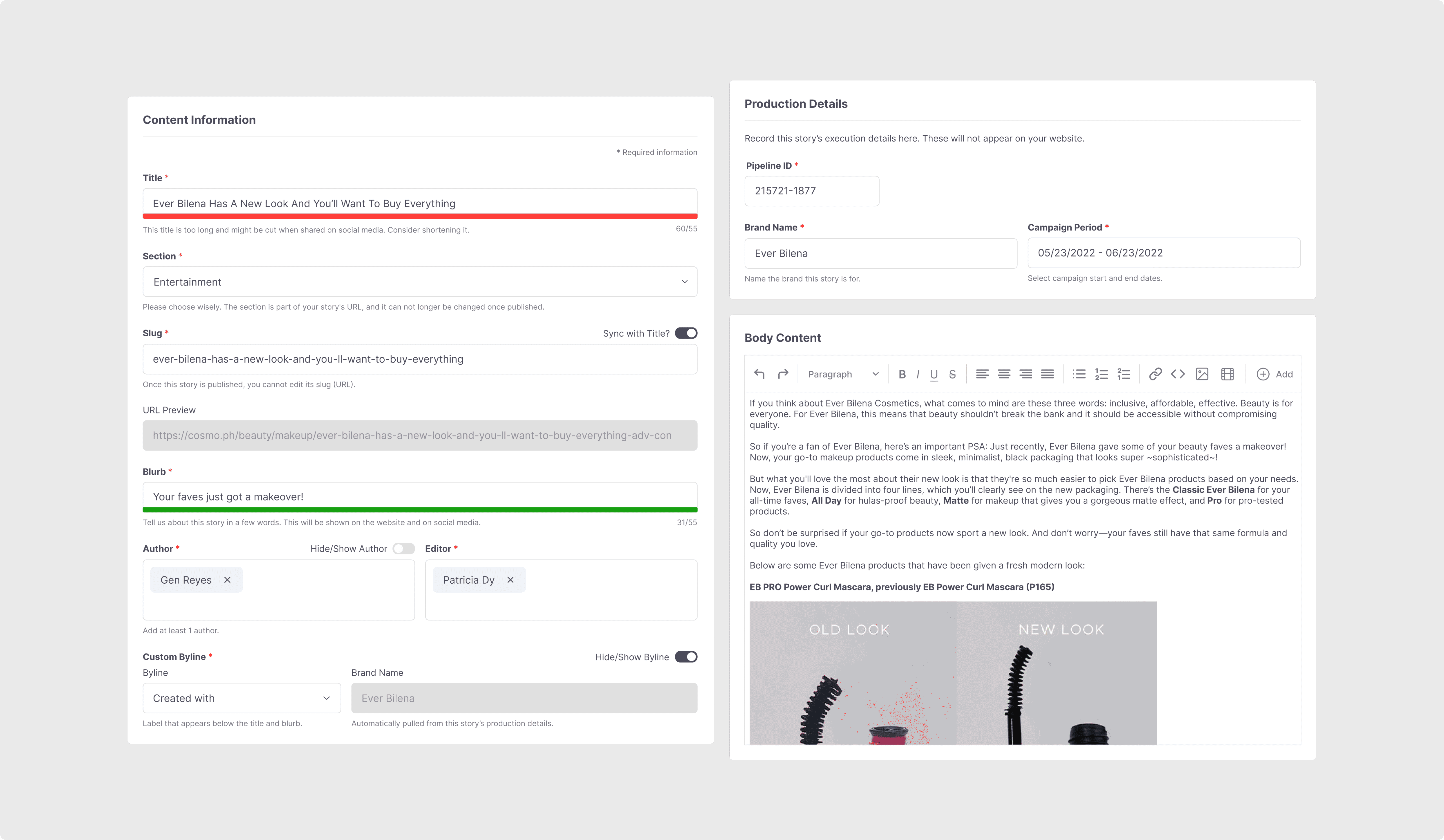
Most critically, I made system state explicit at all times. Autosave behavior, draft status, and edit history were clearly communicated so editors never had to infer whether their work was saved or who last touched it. This shifted the editor from a system users worked around to one they could trust.
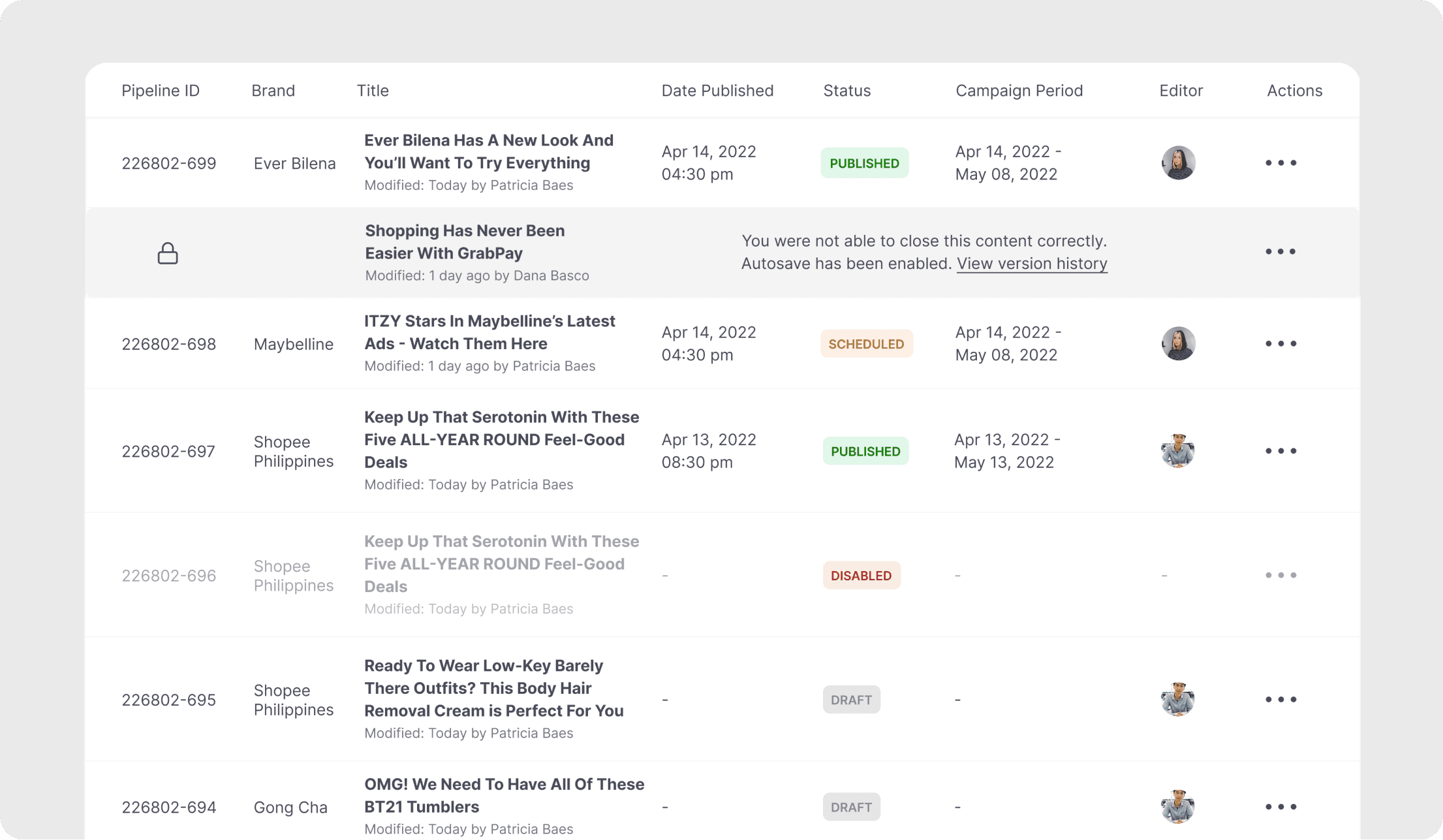
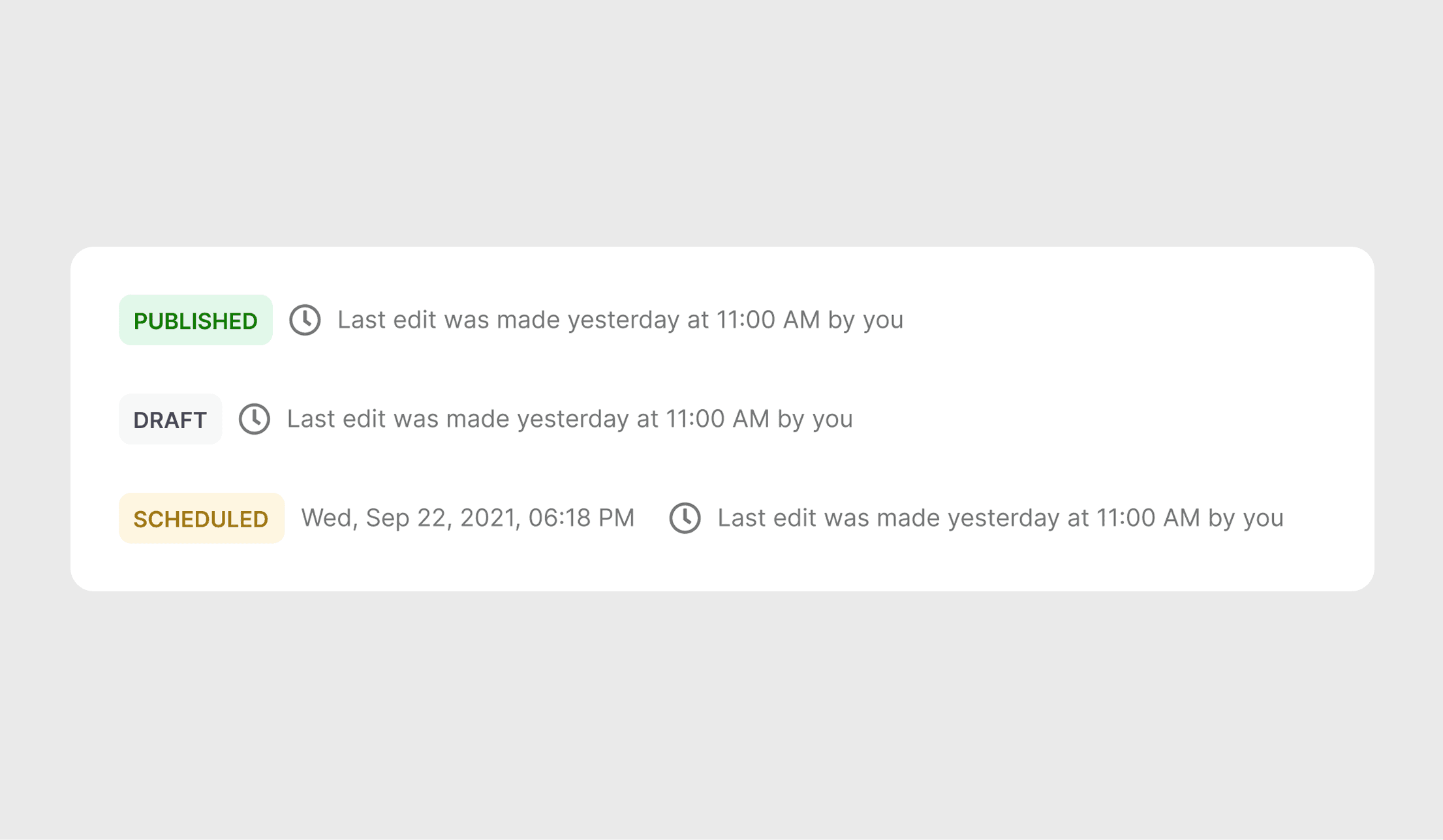
Our team avoided brand-specific customizations in favor of a consistent editor experience, ensuring that editors could move between brands without relearning the system.
Impact
The redesigned content editor reduced the time and mental load required to publish articles, eliminating the need for external drafting tools and restoring confidence in the CMS.
Beyond usability gains, the work aligned product, engineering, and editorial teams around a shared principle: reliability and clarity are foundational. The project established a stable baseline for future CMS expansion without reintroducing editor distrust.